
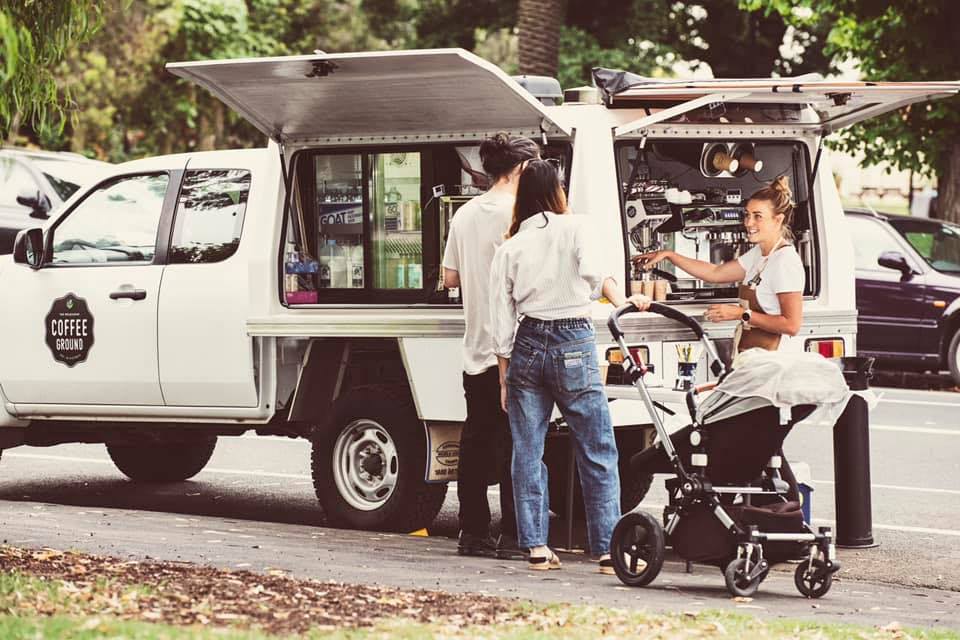
The idea of starting your own mobile coffee business in Australia can be both exciting and daunting. Whether you’re passionate about coffee or looking for a new venture that offers flexibility and freedom, a mobile coffee business can be a great opportunity.
However, it requires careful planning, research, and hard work to succeed. Below are 10 steps to help you get started.
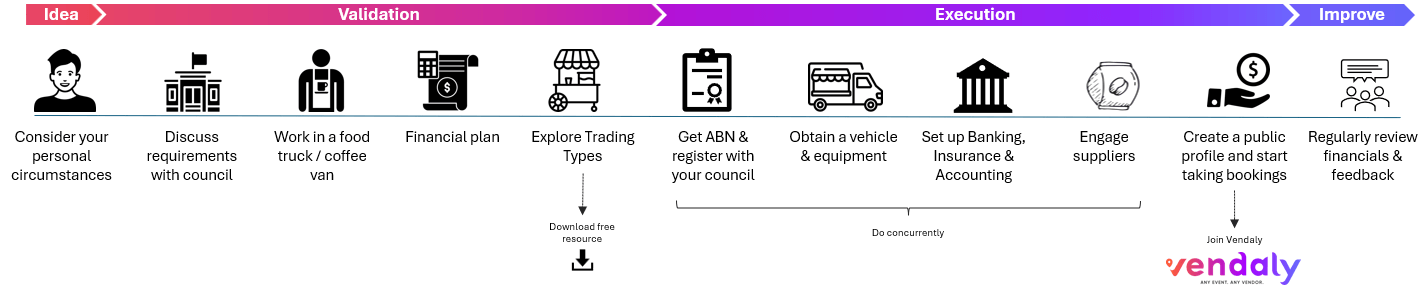
Phase 1: Idea Stage
1. Consider Your Personal Circumstances
Starting a mobile coffee business involves long hours, physical work, and financial investment. You may think it will give you “more time to spend with the kids,” but the reality involves: stock ordering, tax, accounting, event applications, and staff scheduling.
Whatever hours you think you’ll be working, double it. Expectations with your family must be clear, as the financial return may take longer than you think.
Phase 2: Validation Stage
2. Talk to Your Council
It’s never too early to engage the council. Each local council in Australia has its own requirements for operating a food business. Contact them early to understand permits, registrations, and licenses. Don’t assume you can just “pop up” in a local park; find out exactly where you are legally allowed to trade.
3. Work in the Industry First
My biggest tip! Working in a coffee van or food truck before starting your own business provides invaluable hands-on experience. It helps you understand the workflow, customer service expectations, and what equipment you actually need. Looking for a van to work with? Reach out to info@vendaly.com.
4. Research Costs & Create a Financial Plan
Research wholesale suppliers for beans, milk, and cups.
- Pro Tip: Many large roasters offer free barista training and equipment leasing if you sign a subscription.
- Operating Costs: Factor in fuel, maintenance, insurance, software, and event fees. A solid plan helps you determine the capital required for profitability.
5. Explore Different Trading Types
The flexibility of a van is a major plus, but your trading type influences your vehicle choice.
- Fixed Locations: Predictable, loyal following, but risk of low foot traffic.
- Events/Festivals: High volume but high competition.
- Private Bookings: Corporate or community events with guaranteed income.
Phase 3: Execution Stage
6. ABN, Registration, and Permits
To operate legally, you’ll need an Australian Business Number (ABN). Your local council will inspect your vehicle before you trade, usually following Food Safety Standard 3.2.3.
- Food Safety Supervisor: You must have a certified supervisor. Courses are usually under $100 and must meet the 3.2.2 A standard (as of Jan 2025).
7. Obtain the Right Vehicle & Equipment
Your vehicle must house your equipment, supplies, and staff. Whether new or second-hand, it must meet health standards. Core equipment includes:
- Commercial espresso machine (2-group, 10- or 15-amp)
- Grinder, scales, and knock box
- Fridge and Sinks (Fresh & waste water tanks)
- Power source (Generator)
- POS (Eftpos machine)
Warning: Cheap imported trailers often fail Australian towing and safety regulations (like axle ratings). Ensure you get an ATM (Aggregate Trailer Mass) and GVM (Gross Vehicle Mass) assessment at a weighbridge.
8. Professional Services: Banking, Accounting, Insurance
- Banking: Keep your business and personal funds separate with a dedicated business account.
- Accounting: Use software like Xero, MYOB, or Hnry to track expenses for tax time.
- Insurance: You need two distinct policies:
- Business Insurance: Covers Public Liability ($10m–$20m) and non-fixed equipment.
- Commercial Motor Vehicle Insurance: Covers the vehicle and fixed equipment.
9. Fill Your Calendar & Promote
Networking is key. Secure spots at markets and festivals, or use Vendaly to boost your profile and manage enquiries.
- Mitigate Risk: For “attendees pay” events, always try to implement a Minimum Sales Agreement to ensure you cover your costs if turnout is low.
- Fixed Sites: Use local Facebook groups and high-quality signage. It takes 4–6 weeks to build a reputation at a new site.
Phase 4: Reflect and Improve
10. Review Your Financials & Workflows
Continuous improvement is the key to longevity. Regularly track your cash flow and assess your workflow. Identify areas to streamline and listen to customer feedback to improve your offerings.
Conclusion
Starting a coffee van in Australia is a journey that requires thorough research and execution. By following these 10 steps, you’ll be well on your way to building a successful mobile coffee empire.
Ready to dive deeper? Contact hello@vendaly.com.